

Deep in Strandzha, legends have replaced facts
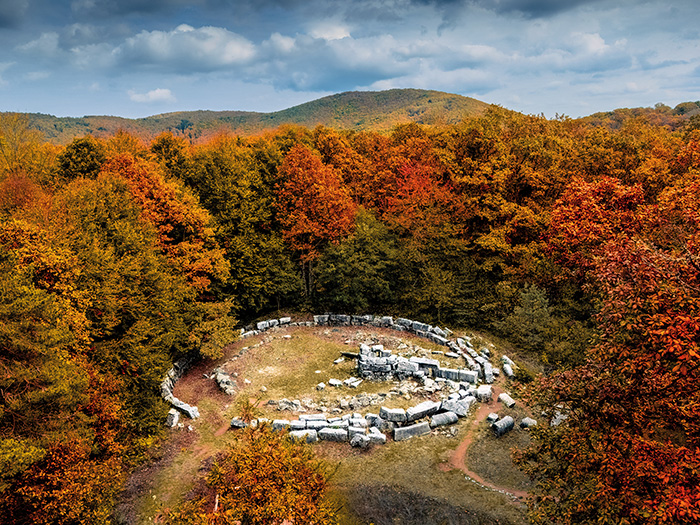
The ancient Thracian tombs across Bulgaria are some of this nation's most stunning historical heritage sites. Some have frescoes, others – sculptures or strange architecture. All of them come with their own set of mysteries and questions that still await definitive answers.
Yet, none of them is as mysterious as a tomb that lies deep in the Strandzha mountains, just a few yards away from the border with Turkey.
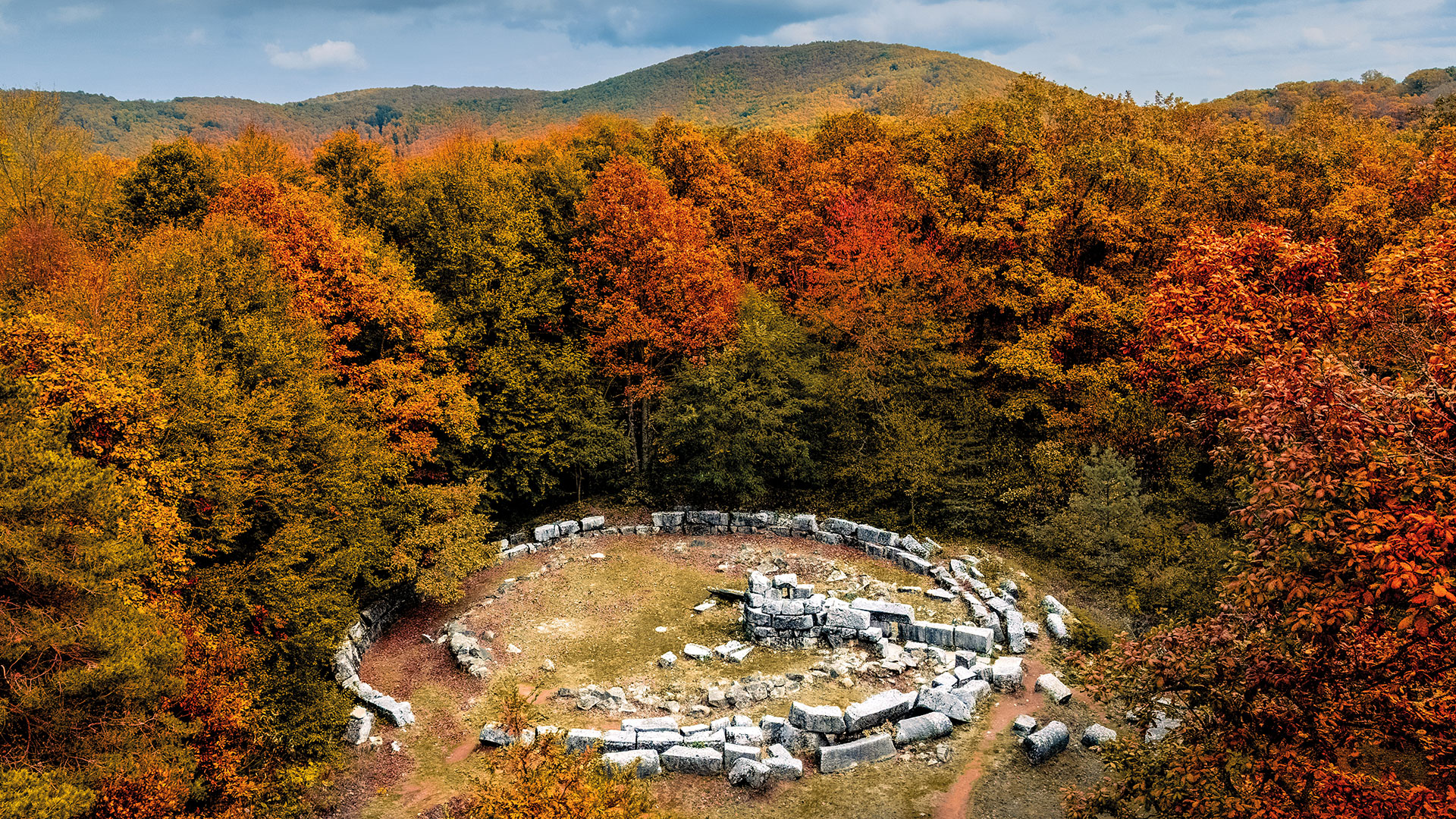
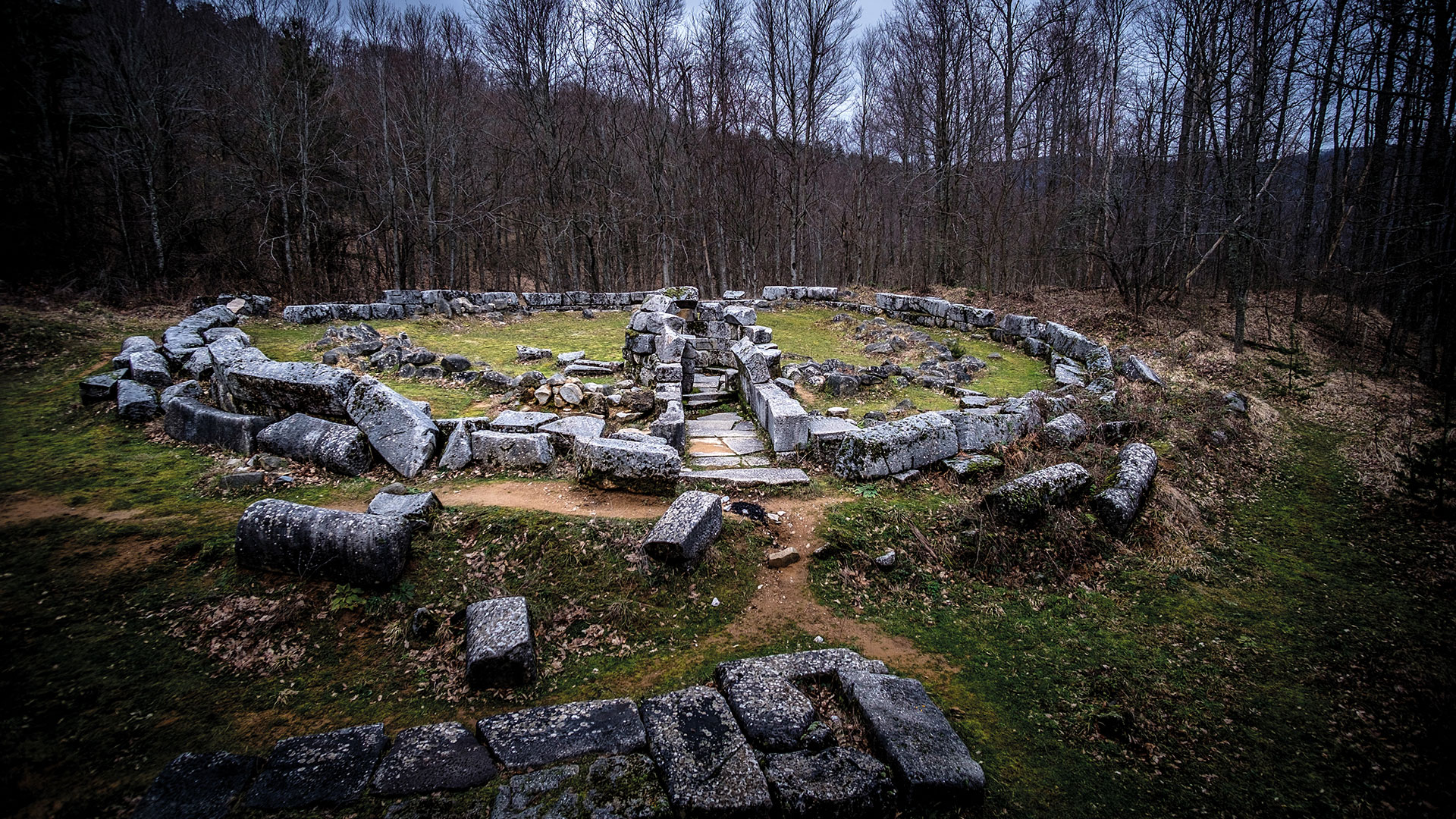
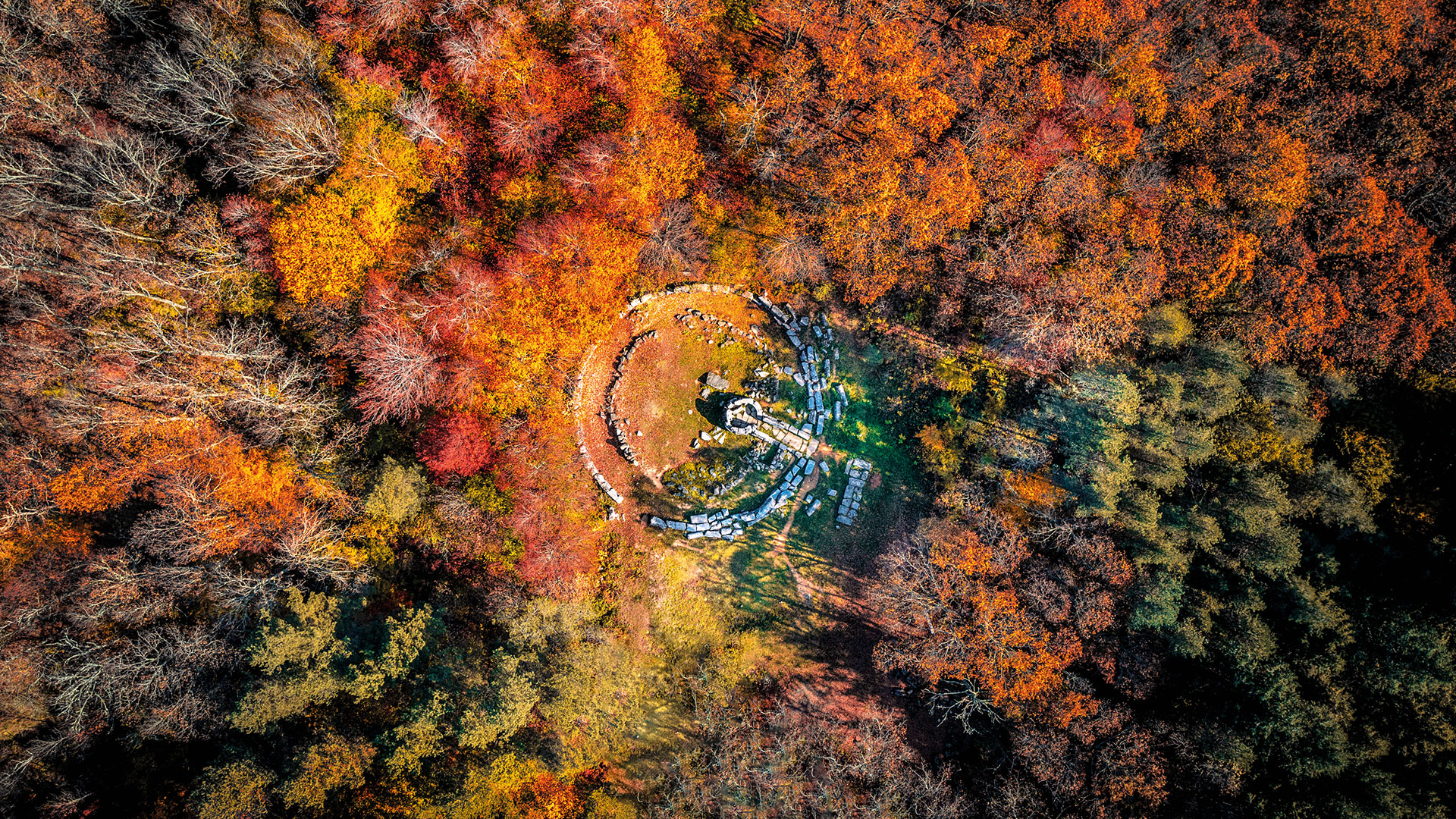
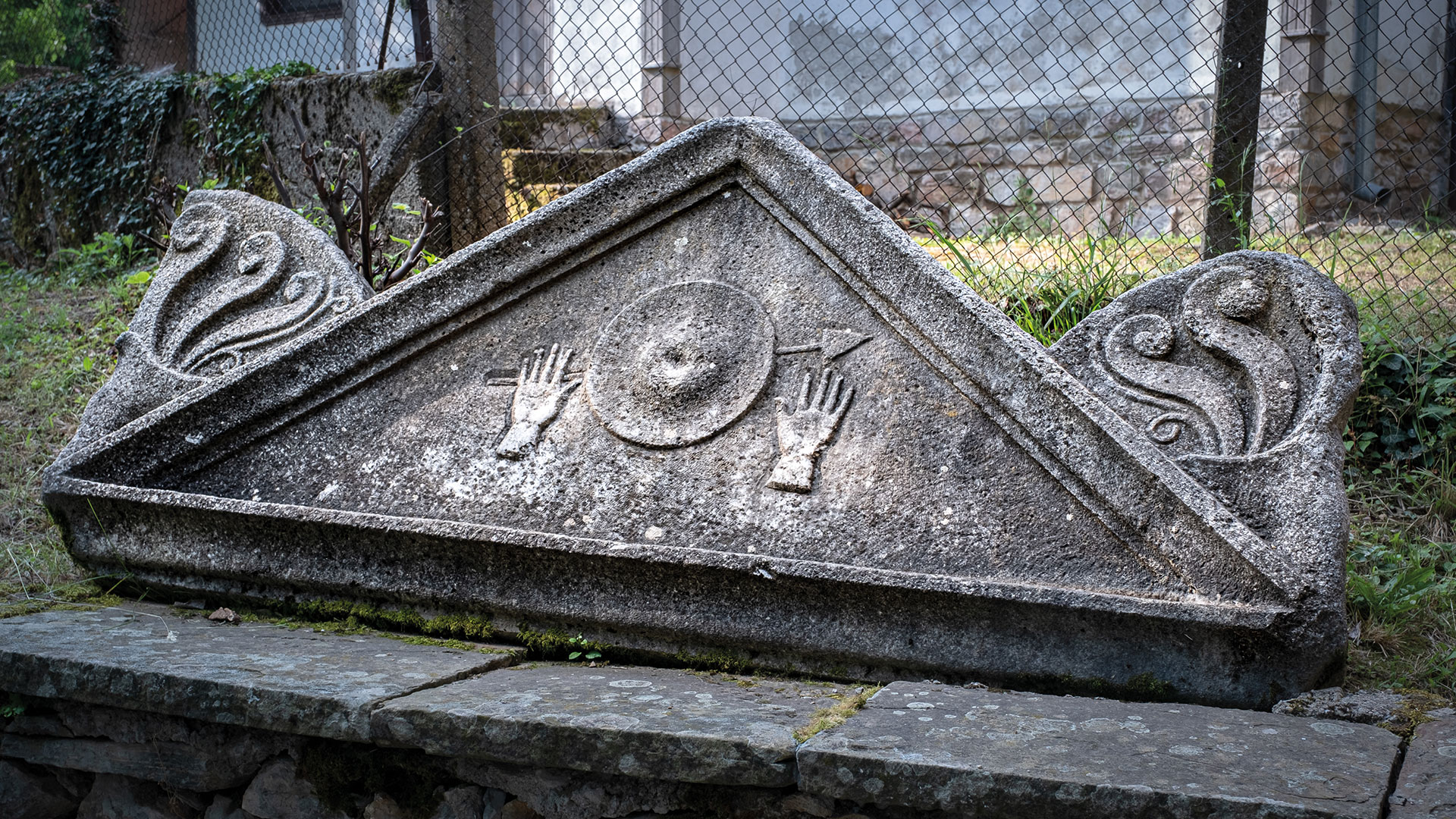
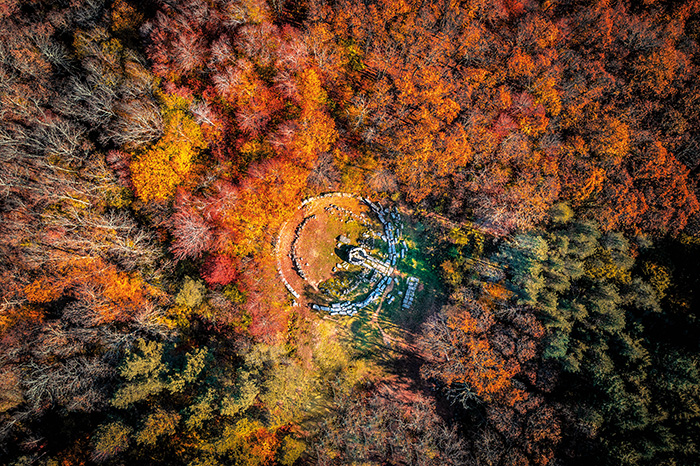
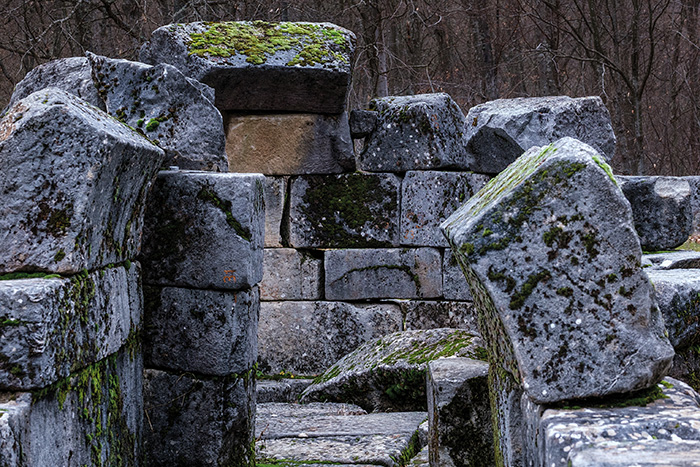
Amid the thick oak forest, two concentric circles of stone enclose a small, round chamber. A short, narrow corridor connects the chamber to the outside world. Once, a triangular pediment with a low relief of a round shield, a spear and two human palms used to adorn the entrance of the corridor. It is not here now; for decades, it has been in the lapidarium of Malko Tarnovo's History Museum.
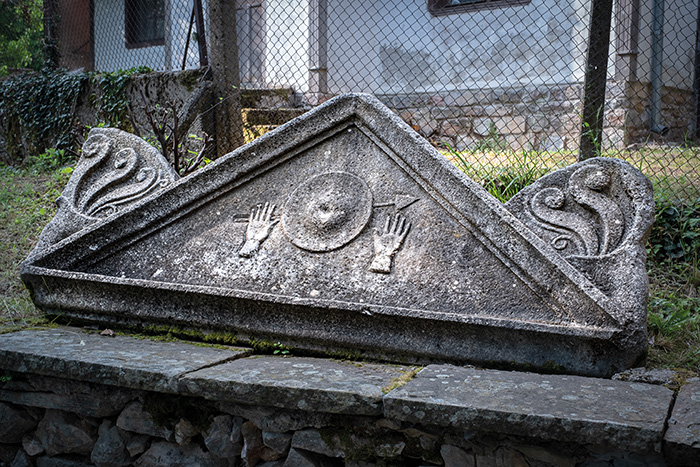
The tomb's pediment
Seemingly, there is nothing around to explain why this strange structure stands in the middle of nowhere. But when you explore the bushes around, you will find more stones, more remains of human activity – a grave here, a wall there. You realise that back in the deep past, when the tomb was still intact, the now deserted area was abuzz with life, and death.
When was it built? For whom? And why?
Combining on-the-ground information, stylistic analysis of frescoes, statues, architecture and objects found in situ, along with recorded history, archaeologists and historians have dated most of the other ancient tombs in Bulgaria with astonishing precision. In some precious cases, they even speculate with a high degree of certainty who the owner of this or that tomb might have been.
The tomb at Mishkova Niva is an outlier.
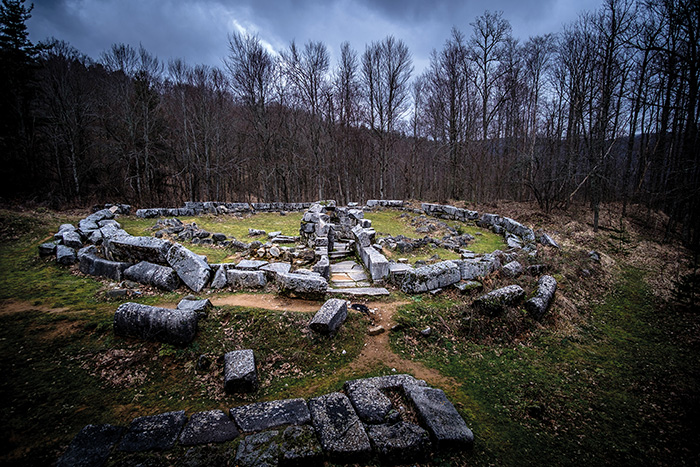
When the tomb was discovered, in the late 19th century, by Karel and Hermann Škorpil, the Czech brothers who laid the foundations of Bulgarian archaeology, it had already been robbed. Archaeologists returned to it about a century later, in the late 1970s and early 1980s. The team did uncover the entire structure, but they found just insignificant pottery shards in and around it.
In the absence of fact, theories about the tomb's date, owner and purpose have begun to circulate.
The most popular of these is even present on the humble information sign that stands beside the tomb. According to it, the tomb was built somewhere in the 4th or 3rd centuries BC (the time when most other ancient Thracian tombs in Bulgaria were constructed) at a place that locals already perceived as sacred, as evident by the remains of a dolmen a couple of meters from the burial chamber. The tomb was not just a burial space for some local Thracian nobleman – the man in question was deified, so the sepulchre served as his temple. For generations, locals would come here to pray to him, or to Apollo, or to someone or something else until, eventually, the entire compound was abandoned with the advance of Christianity, in the 4th-6th centuries.
The shield, the spear and the palms of the pediment slab were interpreted as a secret message of divinity and forbidden knowledge guarded by mystic powers.
In line with this interpretation of the site, the area is now officially labeled the Mishkova Niva Thracian Megalithic Shrine.
However, a less enthusiastic reading of the tomb's architecture, inscriptions found around it and bits and scraps of ancient objects dug up in the excavations paints a different picture. In shape and construction, the Mishkova Niva tomb is rather similar to the 2nd-3rd century AD tombs from a nearby area, a necropolis called Propada. These were erected in the times when the Strandzha belonged to the Roman Empire. The Mishkova Niva tomb was actually part of a bigger compound consisting of a necropolis, a residential building and a mine which belonged to the estate of the Roman emperors. As for the pediment's relief, it is not that enigmatic at all. Shields and spears were depicted on all sorts of funeral monuments in the Roman Empire, to denote that the dead man used to be a soldier. Unlike other ancient sites, in this case the tomb was a just a tomb, full stop. Not a shrine, not a gateway to some spiritual haven, no part of a puzzle of ancient mysteries.
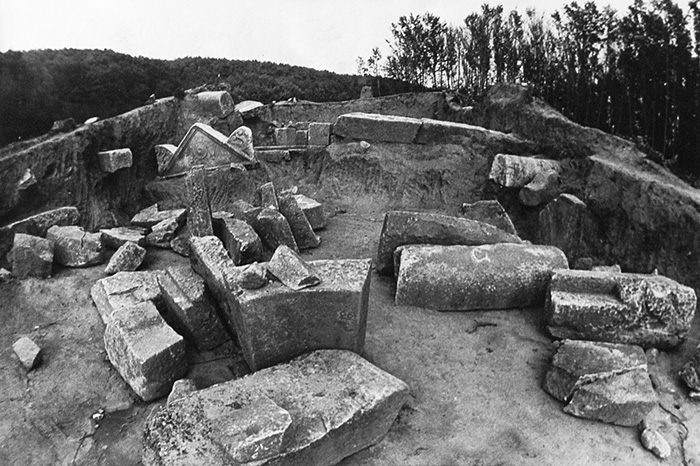
Mishkova Niva during the early 1980s archaeological excavations
Unfortunately, despite all the interest in Mishkova Niva tomb, the site has been crumbling and slowly fading away under the elements for over 40 years, since the archaeologists finished their job here and left. For millennia, the large mound of soil that the ancient builders had accumulated over the tomb protected everything from falling to pieces. The only destructive forces were grave robbers and locals who would come here to collect easily removable slabs and use them to build their houses. But when the archaeologists removed the mound, decay was quick to follow. For decades, the chamber has been gaping towards the Strandzha sky, unprotected and vulnerable, on the verge of collapse.
Mishkova Niva Tomb info
Distance: 6 km by car from Malko Tarnovo
Diameter of the outer wall (crepis): 23 m
Height of the outer wall: 1.8 m
Diameter of the burial chamber: 2.7 m
Access: Free
-
COMMENTING RULES
Commenting on www.vagabond.bg
Vagabond Media Ltd requires you to submit a valid email to comment on www.vagabond.bg to secure that you are not a bot or a spammer. Learn more on how the company manages your personal information on our Privacy Policy. By filling the comment form you declare that you will not use www.vagabond.bg for the purpose of violating the laws of the Republic of Bulgaria. When commenting on www.vagabond.bg please observe some simple rules. You must avoid sexually explicit language and racist, vulgar, religiously intolerant or obscene comments aiming to insult Vagabond Media Ltd, other companies, countries, nationalities, confessions or authors of postings and/or other comments. Do not post spam. Write in English. Unsolicited commercial messages, obscene postings and personal attacks will be removed without notice. The comments will be moderated and may take some time to appear on www.vagabond.bg.
 Vibrant Communities: Spotlight on Bulgaria's Living Heritage is a series of articles, initiated by Vagabond Magazine and realised by the Free Speech Foundation, with the generous support of the America for Bulgaria Foundation, that aims to provide details and background of places, cultural entities, events, personalities and facts of life that are sometimes difficult to understand for the outsider in the Balkans. The ultimate aim is the preservation of Bulgaria's cultural heritage – including but not limited to archaeological, cultural and ethnic diversity. The statements and opinions expressed herein are solely those of the FSI and do not necessarily reflect the views of the America for Bulgaria Foundation or its affiliates.
Подкрепата за Фондация "Фрий спийч интернешънъл" е осигурена от Фондация "Америка за България". Изявленията и мненията, изразени тук, принадлежат единствено на ФСИ и не отразяват непременно вижданията на Фондация Америка за България или нейните партньори.



Add new comment