

In the footsteps of tragic medieval king who divides 21st-century Bulgarians
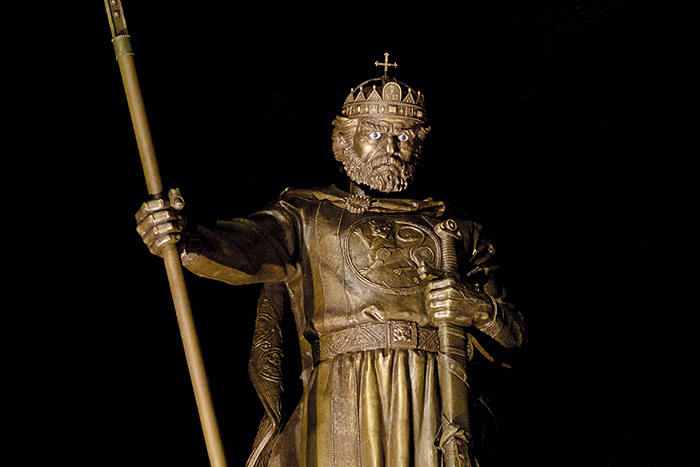
In early October, the people in Sofia were treated to a grand and unexpected ceremony. A Bulgarian military plane took off from Greece with three medieval skeletons on board. When it landed, the remains were interred, with all pomp and circumstance, in the St Sofia church. The president, members of the government and prominent public figures were present among thick crowds of onlookers.
This was how, according to official news, the remains of King Samuil of Bulgaria, his son Gavril Radomir and his nephew Ivan Vladislav were returned to their homeland after spending about 60 years in the vaults of Thessaloniki's history museum.
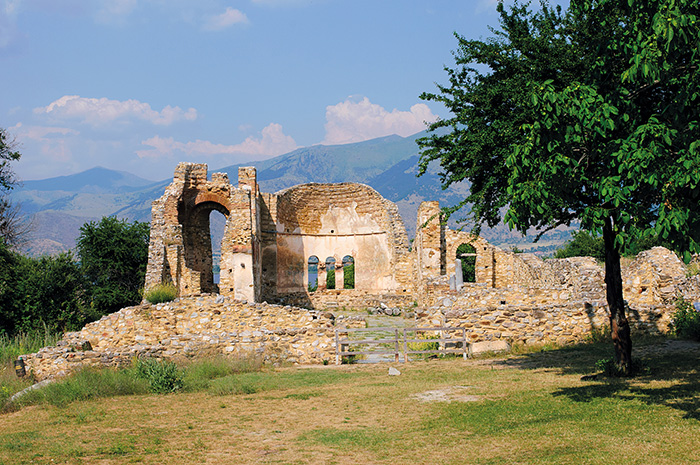
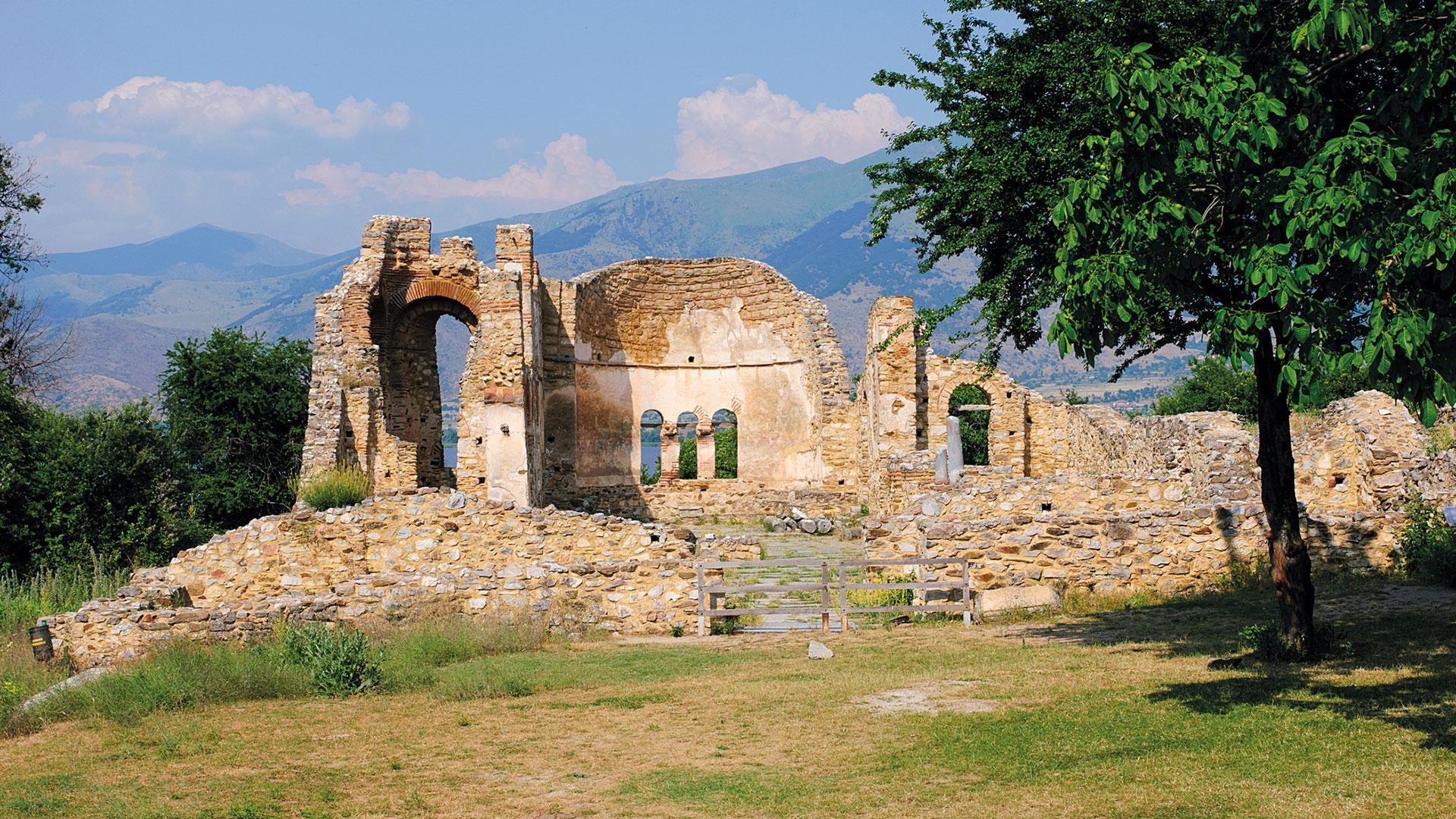
The Basilica of St Achilleios on Lake Small Prespa, where the remains believed to belong to King Samuil and his family were discovered
Meanwhile various members of the public mocked or disputed the narrative. Some said there was no hard evidence the three skeletons belonged to the medieval rulers. Others claimed that their remains should have been returned to their original burial site, in the ruins of a medieval church on an island in the Small Prespa lake, now at the border of Greece and North Macedonia. Yet others pointed to the fact that Bulgaria had promised to return to Greece a number of scientifically important and artistically distinctive medieval icons and religious objects that ended up in Bulgaria during the three wars Bulgaria and Greece fought in the 1910s.
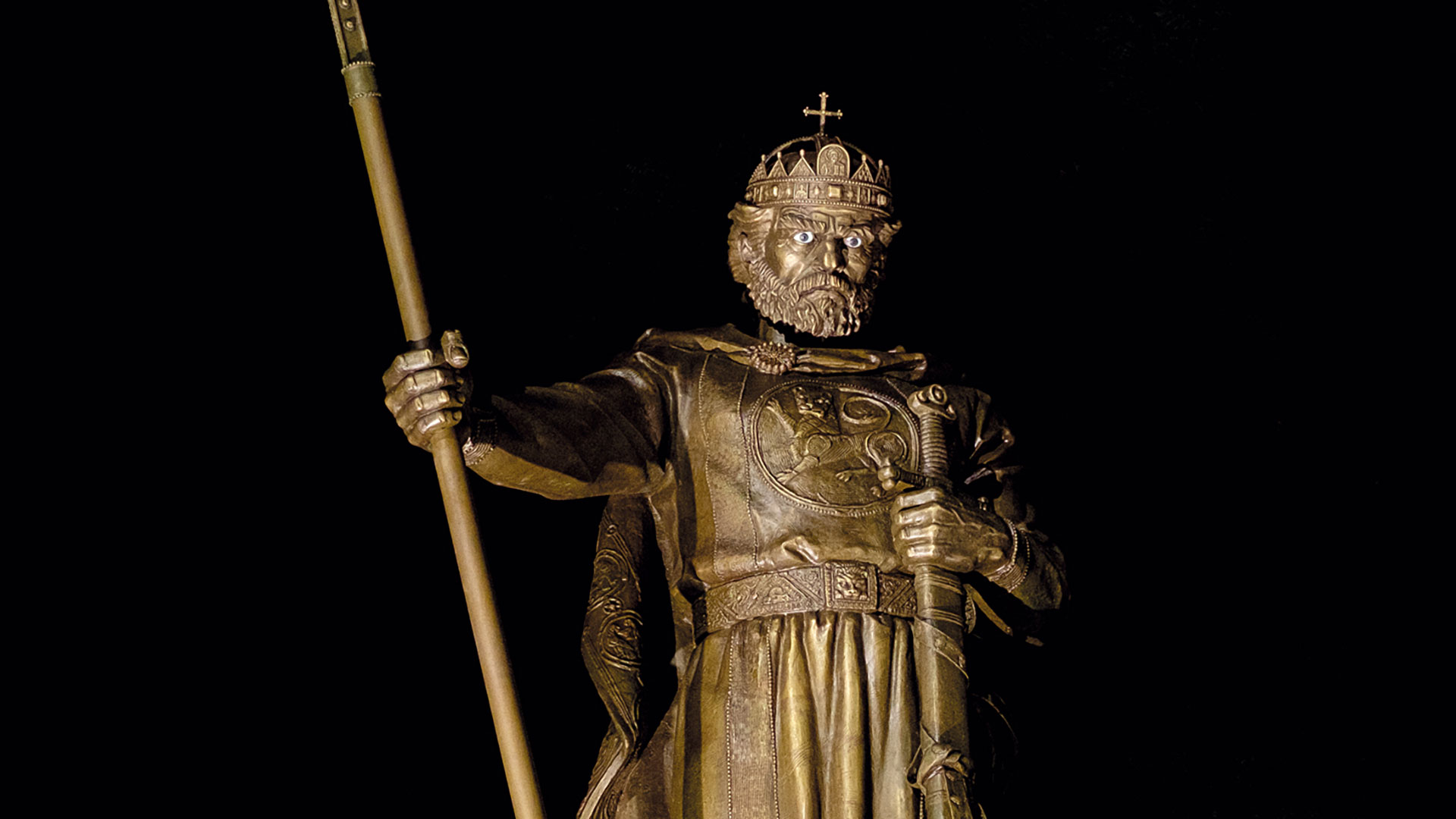
Whatever the opinions, one thing is certain: King Samuil is one of Bulgaria's greatest heroes. It is easy to see why. In a dire moment for Bulgaria, he fought for its independence in the course of decades. He ultimately failed. His failure was marked by medieval cruelty, mass suffering and an unspeakable family tragedy of death and betrayal.
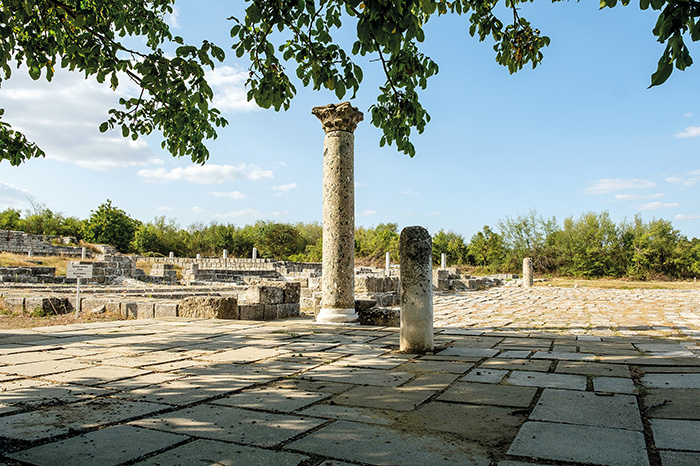
Preslav, Bulgaria's capital in the 10th century, was a thing of splendour. After the Byzantines took over, in the 970s, the city has become a ruin
Here is what happened.
In the 970s, Bulgaria was on the verge of collapse. The ambitious rule of King Simeon the Great (893-927) had overstretched the country and had exhausted its resources. The long and largely uneventful rule of his son, King Petar (927-969), was less about wars and more about getting uncomfortably comfortable with Bulgaria's archenemy, the Byzantine Empire. Byzantine culture, politics and meddling were pouring freely into Bulgaria, reshaping it into a smaller copy of Byzantium. After Petar's death, his sons Boris II and Roman were unable to keep it together. In 971, the Byzantines took Bulgaria's capital, Preslav. In 977, Boris II was mistakenly killed while running from Byzantine captivity. The Byzantines castrated Roman so that he could never claim the Bulgarian throne.
But not all of Bulgaria was subjugated.
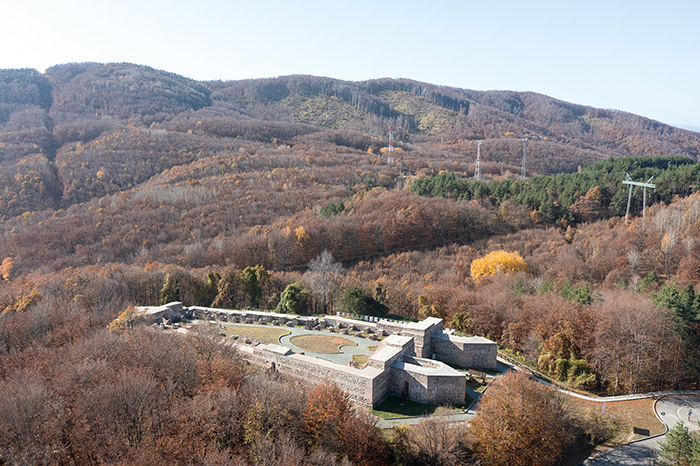
The over-restored Roman and medieval fortification at the Trayan's Gate pass was where Samuil won his greatest victory against the Byzantines, in the summer of 986
The western part of the country, which roughly included the Sofia Plain and the Struma and Mesta valleys in modern Bulgaria, and the regions around the Ohrid and Prespa Lakes in what is now North Macedonia, was still free. The resistance was led by four brothers, the sons of Sofia's governor. Their father was a Bulgarian, their mother was an Armenian noble and they all bore Old Testament names: Moisei, Aron, David and Samuil.
When the four brothers heard that the Byzantine emperor had died, in 976, they revolted against his successor, Basil II (976-1025), and reclaimed what Byzantium had taken, including Preslav. In time, however, cracks appeared between them. Moisei and David suddenly died; some modern historians suspect Samuil of foul play in at least one of these deaths. Then Samuil discovered that his brother, Aron, was conspiring with Basil II to accept his rule. Samuil dealt with the situation in a manner fit for the age. In 987, he killed Aron and his entire family. Only one of them was spared – his son Ivan Vladislav.
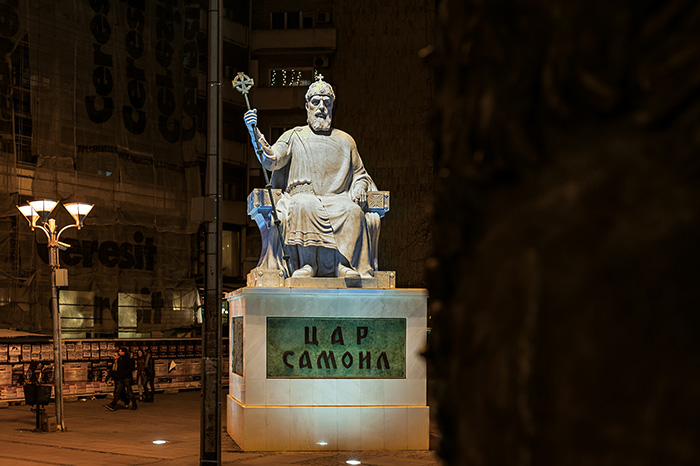
King Samuil (spelled Samoil in the local language) is also venerated in North Macedonia. Bulgaria and North Macedonia both claim the ill-fated king as their own
Samuil tirelessly fought the Byzantines, who were headed by an emperor as headstrong as himself. Basil II was determined to deal with Bulgaria once and for all. In decades of military campaigns, both sides had great victories and great failures. Samuil's biggest win was in the Trajan's Gates Pass in the Stara Planina, in 986.
A wise politician, Samuil was aware that war alone was not enough to keep his realm independent. He was also a master of another tool of medieval politics – dynastic marriages. He wed one of his daughters to the Serbian ruler, in a bid to stop Serbia from allying with the Byzantines. After he captured the governor of Thessaloniki, he gave him another of his daughters in marriage and sent him as governor of what is now Durrës, on the Albanian Adriatic coast. Samuil's son, Gavril Radomir, married the daughter of the Hungarian king.
Despite his clever politics, Samuil could compete neither with the larger and better resourced Byzantine Empire nor with Basil's talent for inciting local conflicts with Bulgarian neighbours and his military acumen. In the early 1000s, the Bulgarian realm began to shrink until it was reduced to the territories around the Ohrid and Prespa Lakes.
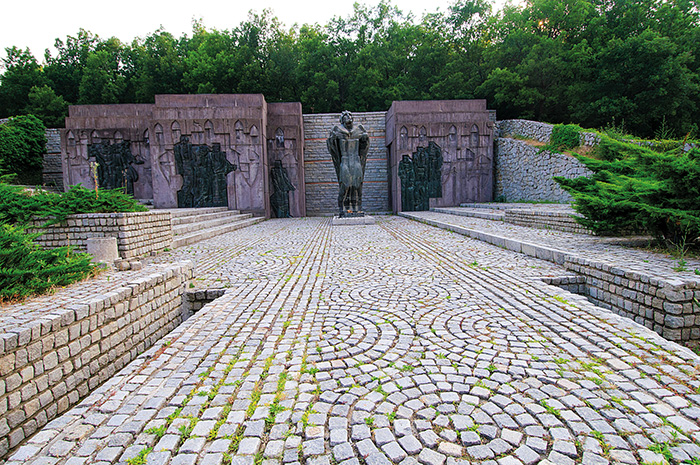
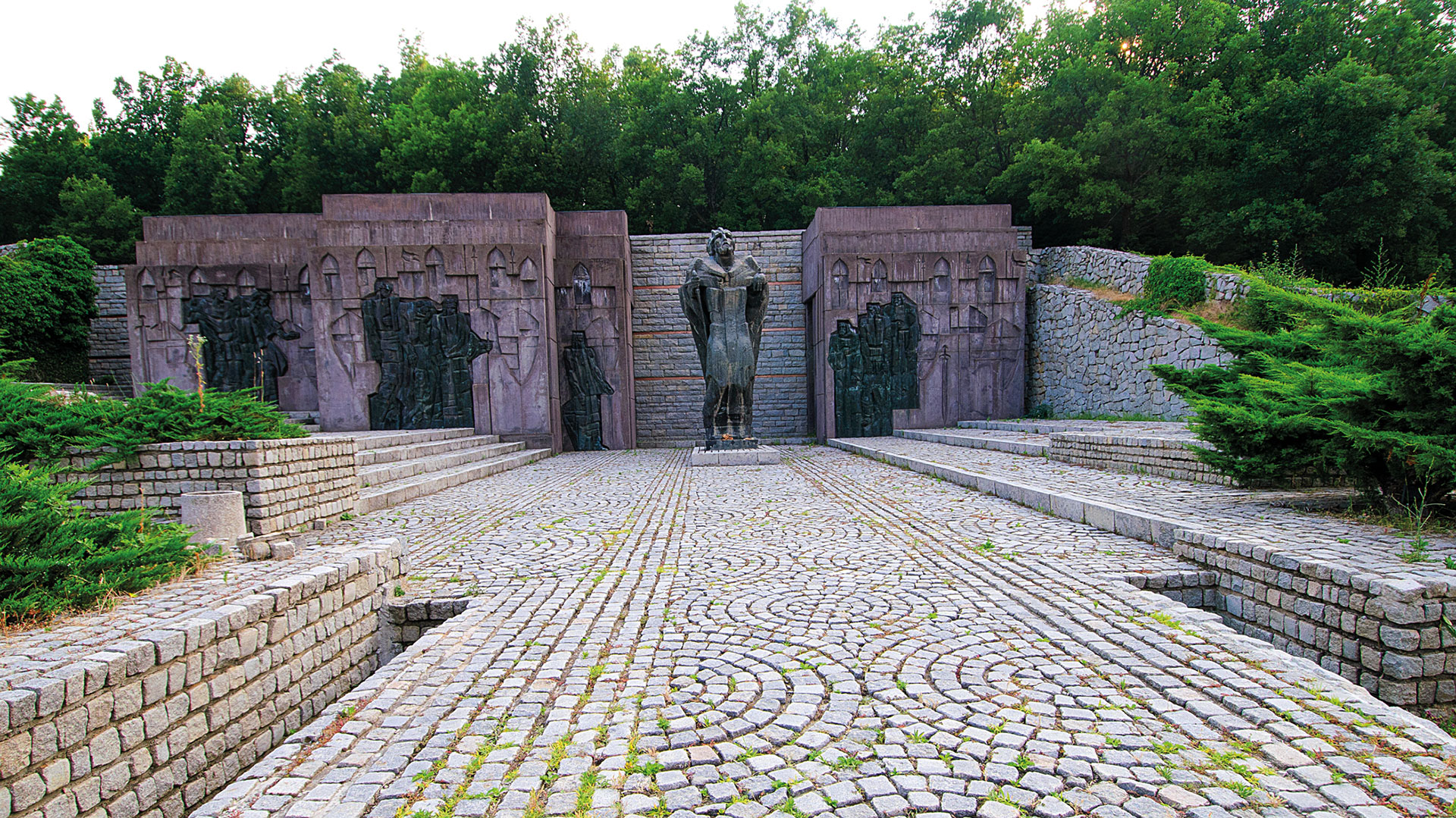
In the 1970s, a large monument was erected near the modern village of Klyuch, in the Belasitsa mountains, to mark the site of Samuil's last battle against the Byzantines
The Byzantines' fatal blow came on 29 July 1014, when the Bulgarian army, led by the ageing Samuil himself, suffered a heavy defeat at Klyuch Pass in the Belasitsa Mountains. Thousands of Bulgarian soldiers were captured. According to medieval sources, Emperor Basil II ordered nearly all of them blinded. One in a hundred was left with one eye – to lead his comrades home.
The soldiers did return home, to Prespa. Samuil could not bear the sight. He suffered a stroke and died shortly afterwards.
His son, Gavril Radomir, took the throne, but not for long. The following year his best friend, Ivan Vladislav, killed him during a hunt, claimed the throne for himself and started peace negotiations with Basil II. These failed. An ill-fated ruler in his own right, Ivan Vladislav spent the rest of his short reign, which concluded in 1018, killing or blinding other members of Samuils's family and fighting the Byzantines. He died in unknown circumstances while besieging Durrës.
It was only then that Bulgaria finally fell under Byzantine rule.
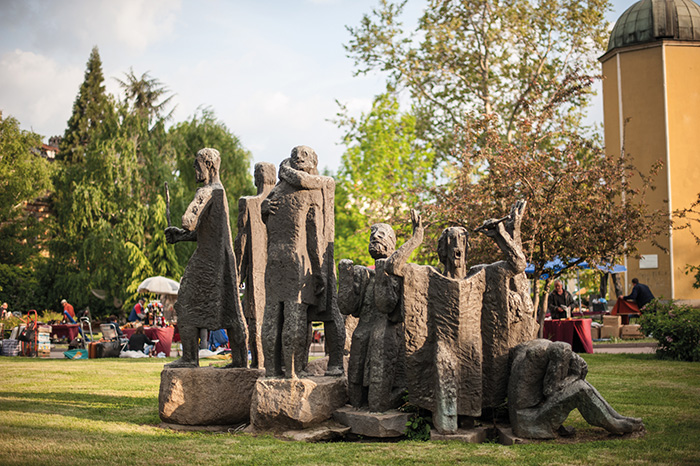
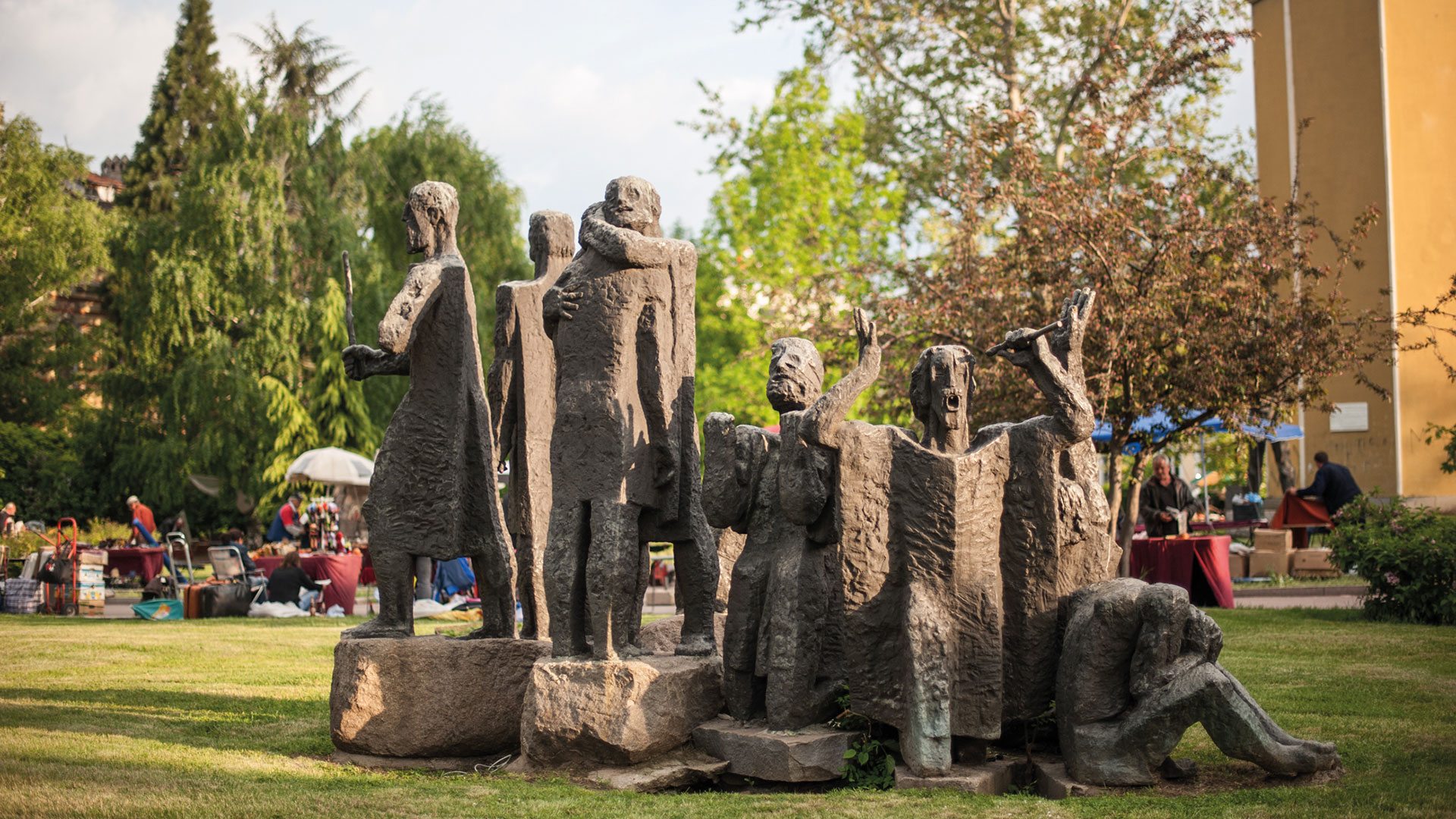
Samuil's blinded soldiers, a sculpture in central Sofia
The tragic story of Samuil and his kin has understandably turned the family into haloed, half-legendary figures in Bulgaria and North Macedonia alike. Today, both countries claim King Samuil as their own.
In the 1980s, a Greek archaeologist, Nikolaos Matsopoulos, sensationally claimed that he had discovered the remains of King Samuil, Gavril Radomir and Ivan Vladislav during excavations 20 years earlier on the island of St Achilles in the Small Prespa lake.
The three tombs had no inscriptions, so Prof Matsopoulos based his theory on circumstantial evidence. The supposed skeleton of King Samuil was discovered covered in rich, gold-embroidered fabric, decorated with parrots – the heraldic bird of Samuil and his brothers. The skeleton belonged to a 70-year-old male – which is consistent with Samuil's age when he died. It was just 1.50 m tall. His left arm had been broken at the elbow and had healed badly, fixing the arm at an angle of 140 degrees. This fits historical accounts about Samuil being badly wounded in the Battle of Spercheios, which took place in 996 or 997 and was his first heavy defeat. Anthropological reconstruction of the skull suggested Armenian features – which also matches Samuil's parentage.
Circumstantial or not, the evidence was sound enough for Bulgarian politicians. Efforts to bring King Samuil to Bulgaria started as early as the 2000s and concluded with the unexpected announcement and reburial, in 2026. You can now go and see the sarcophagi for yourself in the St Sofia church.
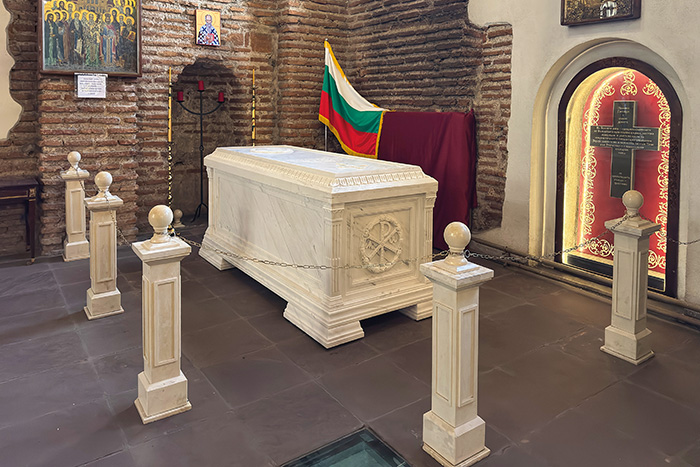
King Samuil's supposed remains now lie in state in a white marble sarcophagus made from stone sourced from the Prilep area in North Macedonia. Prilep was one of his capitals. One of the reliefs depicts two medieval Bulgarian lions holding a fortress, symbolising Ohrid, also in North Macedonia. The city was another of Samuil's capitals
-
COMMENTING RULES
Commenting on www.vagabond.bg
Vagabond Media Ltd requires you to submit a valid email to comment on www.vagabond.bg to secure that you are not a bot or a spammer. Learn more on how the company manages your personal information on our Privacy Policy. By filling the comment form you declare that you will not use www.vagabond.bg for the purpose of violating the laws of the Republic of Bulgaria. When commenting on www.vagabond.bg please observe some simple rules. You must avoid sexually explicit language and racist, vulgar, religiously intolerant or obscene comments aiming to insult Vagabond Media Ltd, other companies, countries, nationalities, confessions or authors of postings and/or other comments. Do not post spam. Write in English. Unsolicited commercial messages, obscene postings and personal attacks will be removed without notice. The comments will be moderated and may take some time to appear on www.vagabond.bg.


Add new comment