


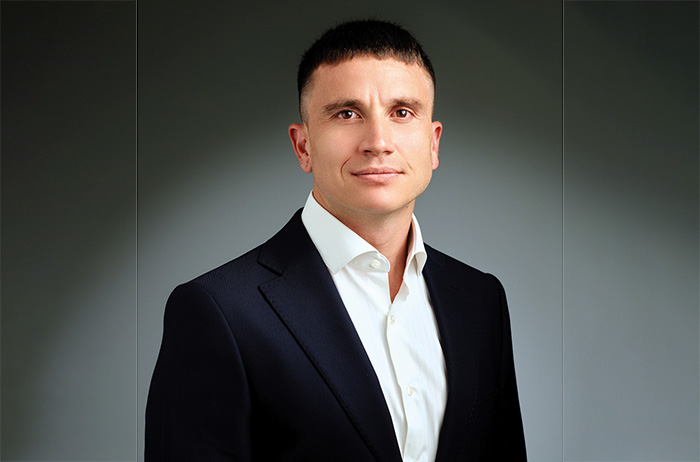
Vladislav Ivanov, co-founder, on making room for better work
Picture a promising customer enquiry sitting in an inbox. The salesperson needs a technical answer. The technical specialist needs an old proposal. The colleague who knows where to find it is in a meeting.
Everyone is working. The customer is still waiting.
For Vladislav Ivanov, co-founder of LimeShift, this is a better starting point for a conversation about AI than a list of tools. The opportunity is not just a faster reply, but understanding what holds up the work and what the company could do with the capacity that opens up.
You come from blockchain, one of the most hyped industries of the past decade. Why move into AI?
Working in blockchain taught me to separate excitement about a technology from a good reason to use it. With AI, what drew me in was using it in our own work and seeing how much more a person or a small team could take on.
My starting point was actually ERP systems, which gives you a practical view: the software can be impressive, but someone still has to use it to get an order out of the door.
Seeing the possibility and making it useful inside a company are different things, though. That is where LimeShift comes in: understanding the business, choosing where the technology genuinely helps, and working with the team to make it work in practice.
Where can AI make a meaningful difference to a business?
I would look at the work that keeps waiting for someone.
Take a company preparing complex offers, where every serious enquiry ends up on the desk of the same experienced colleague. They know which past project is relevant, what is missing and which promises not to make.
The obvious request is "Can AI write our offers?" I would first ask to see the last enquiry. Where did it get stuck? What did that colleague have to find, check or decide?
AI could assemble the relevant information, identify gaps and prepare a draft. The specialist would still make the judgement, but would not have to reconstruct the whole story every time.
If the actual delay is an approval that nobody owns, though, a faster document will not get it out of the building. We need to fix the right part.
Beyond efficiency, what can AI make possible that was not feasible before?
Saving time matters. But then I want to ask: what have you wanted to offer customers but never had the capacity for?
A small engineering company might turn down unusual enquiries because assessing them takes too much senior time. If AI helps compare the requirements with previous work, some of those enquiries may become worth considering. An accounting firm might finally be able to offer clients a regular review of how their business is performing.
Neither outcome is automatic, but the company gains another option. You are not only shortening the list of things people have to do. You are opening up work they previously could not take on.
What separates an impressive demo from something a business can rely on?
A Friday afternoon.
The customer has changed the requirements. There are two versions of the spreadsheet, both apparently final. The person who built the system is not available. That is a much more useful test than a perfect example in a presentation.
The system needs to work with the company’s real information, inside the tools people use, with clear rules about access and approval. When something is missing or contradictory, I would rather it asks than produces a convincing answer anyway.
Reliability does not necessarily mean building more software. If an existing product does the job, use it. Build something custom when there is a good reason, remembering that someone will have to maintain it. The client should not be paying for complexity it does not need.
How do employees become participants rather than just users?
By being allowed to tell us that our idea will not work.
The person doing the job may know an exception that changes the whole design. If we only speak to management and arrive with a finished solution, we miss that knowledge.
People will react differently. Some will want to experiment immediately. Others will ask whether their role is changing, or who gets blamed when the system makes a mistake. Those are reasonable questions. We should work through real tasks together and make responsibilities clear, and management needs to give people time to learn. A training session cannot do that on its own.
A useful sign is when someone starts suggesting changes based on their own experience. They are helping shape how the company works.
How do you know whether an AI initiative is delivering value?
Agree on what would make it worthwhile before building it.
If we are improving offers, the measure is not how quickly AI produces a page of text. It is how long it takes the team to produce an offer it can actually send, including the checking and corrections.
Then look at what happens in practice. Are people using it? Has it released capacity, improved the customer experience or enabled new work? Does that justify the cost? Sometimes the answer is to expand, sometimes to change the implementation, and sometimes to stop. The point is to make a good business decision, not to keep an AI project alive.
What should a company gain from working with an AI consultant?
A useful solution, but also better judgement about the next one.
The team should understand what the system does, where its limits are and how to recognise a result that needs checking. Management should know what it costs, what value it brings and which decisions remain theirs.
A long-term relationship is fine when it remains useful. What I do not want is a system nobody inside the company understands and everyone is afraid to touch.
A good reason to call us again is "We have spotted another opportunity." It should not be "Nobody here knows how this works."
-
COMMENTING RULES
Commenting on www.vagabond.bg
Vagabond Media Ltd requires you to submit a valid email to comment on www.vagabond.bg to secure that you are not a bot or a spammer. Learn more on how the company manages your personal information on our Privacy Policy. By filling the comment form you declare that you will not use www.vagabond.bg for the purpose of violating the laws of the Republic of Bulgaria. When commenting on www.vagabond.bg please observe some simple rules. You must avoid sexually explicit language and racist, vulgar, religiously intolerant or obscene comments aiming to insult Vagabond Media Ltd, other companies, countries, nationalities, confessions or authors of postings and/or other comments. Do not post spam. Write in English. Unsolicited commercial messages, obscene postings and personal attacks will be removed without notice. The comments will be moderated and may take some time to appear on www.vagabond.bg.










Add new comment