


We examine the following real-life examples to answer the question: How artificial intelligence is changing physical access control
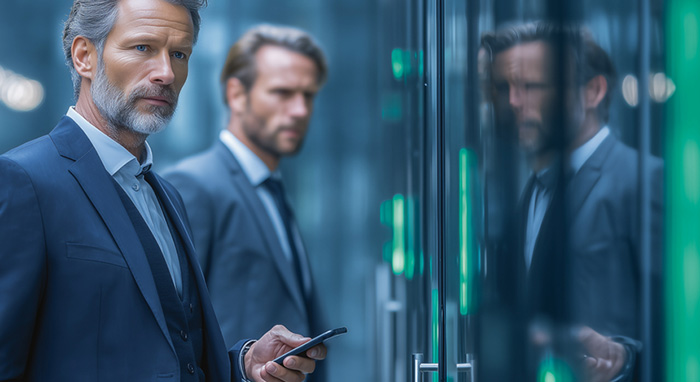
In a manufacturing plant, an employee enters an area where machinery is being serviced. Being there at that moment could put their safety at risk. The access control system allows entry because the employee has the necessary permissions, but it does not necessarily monitor what is happening inside the area. How can such a situation be detected in time, allowing the appropriate action to be taken?
In an office building, an employee presents their access card to the entrance reader. The system checks their credentials and grants access. At first glance, everything seems fine.
But how can the system detect if another person is following close behind and attempting to enter as well? The access card confirms one person's right to enter, but does not show whether what actually happens corresponds to the access granted.
This is where the next level of physical security begins: not simply recording who enters, but analysing what is actually happening and identifying potential unauthorised access.
WHEN SYSTEMS SEE ONLY PART OF THE PICTURE
Access control and video surveillance serve different but complementary purposes. One system checks permissions and records entries, while the other provides visual information about what is happening.
When these data sources are not used together, security staff must monitor camera feeds continuously, spot suspicious situations and check whether what they see matches the access records. This is a considerable challenge at busy entrances, because amid the multitude of events, an important detail may go unnoticed
AI ANALYSES THE SITUATION
The AI model analyses video data and can recognise specific situations, such as whether the person about to use their access card at the entrance is alone or accompanied by another person. The AI model analyses video footage and can identify specific situations, such as whether a person approaching an entrance is alone or accompanied by someone else. This helps flag potential risks in time.
This adds context to the information provided by the access control system. Rather than relying on security staff to remain vigilant while monitoring multiple screens, the system can alert them to a specific event requiring investigation, allowing them to compare what they see with the access records.
It is important to distinguish between an unusual situation and an actual breach. AI analysis can draw attention to a potential risk, but any assessment and subsequent action must take the specific circumstances into account.
DYNAMIC RULES DETERMINE THE RESPONSE
Identifying a potential risk is only the first step. To be useful in practice, a detected event must be able to trigger an appropriate response.
This is where dynamic rules come in. They define how the system should respond to different events and predefined conditions. When the AI model identifies a situation that meets specific criteria, the information can be passed to an operator, while the relevant rule triggers a defined physical response.
For example, an event classified as a potential risk could generate an alert for security staff while also triggering a door lock, if this response has been configured in advance.
This allows organisations to automate parts of the process without relying on every event being spotted and then processed manually. The rules define the actions, while logging alerts and responses makes them traceable. Security staff retain a vital role in assessing situations that require human judgement before automated action is taken.
LIREX ACS: FROM ACCESS CONTROL TO RISK MANAGEMENT
At LIREX, we are enhancing our LIREX ACS physical access control platform with AI-powered dynamic rule management. This brings situation analysis and responses to detected events together in a single, integrated process.
For businesses, this means the potential for earlier detection of security breaches, faster responses and more efficient use of security resources. Instead of relying solely on continuous monitoring and subsequent checks, security teams can use automated alerts and predefined actions while retaining human oversight.
Because security is about more than knowing who is authorised to open a door. It is also about understanding what is happening around it and responding in time to limit the risk of an unauthorised act or an incident.
+359 2 9 691 691
office@lirex.com
www.lirex.com
Един пропуск, двама души. Как AI хваща това, което системата пропуска?
Разглеждаме следните действителни примери от ежедневието, за да отговорим на въпроса: Как изкуственият интелект променя контрола на физическия достъп?
В производствено предприятие служител влиза в зона, в която се извършва техническо обслужване на машините. Присъствието му в този момент може да застраши безопасността му. Системата за контрол на достъпа ще разреши влизането, защото служителят има необходимите права, но сама по себе си не отчита непременно какво се случва в зоната. Как може подобна ситуация да бъде открита навреме и да се предприеме подходящо действие?
В офис сграда служител доближава пропуска си до четеца на входа. Системата проверява правата му и разрешава преминаването. На пръв поглед всичко е наред.
Но как може да бъде установено, ако зад него има още един човек, който се опитва да премине? Пропускът потвърждава правото на достъп на един човек, но не показва дали реалната ситуация съответства на разрешеното преминаване.
С това започва следващото ниво на физическата сигурност: не просто да се регистрира кой влиза, а да се анализира какво се случва в действителност и дали има риск от неоторизиран достъп.
КОГАТО СИСТЕМИТЕ ВИЖДАТ САМО ЧАСТ ОТ СИТУАЦИЯТА
Контролът на достъпа и видеонаблюдението изпълняват различни, но допълващи се функции. Едната система проверява разрешенията и регистрира преминаванията, а другата осигурява визуална информация за случващото се.
Когато тези данни не се използват съвместно, физическата охрана трябва да следи непрекъснато камерите, да забелязва съмнителни ситуации и да проверява дали видяното съответства на регистрираните преминавания. При входове с голям поток от хора това е сериозно предизвикателство. В множеството събития важен детайл може да остане незабелязан.
AI АНАЛИЗИРА СИТУАЦИЯТА
Изкуственият интелект и видеоанализът дават възможност системата да оценява не само регистрирания достъп, но и обстоятелствата около него. AI моделът анализира видеоданните и може да разпознава определени ситуации, например дали пред входа е само един човек, който ще използва пропуска си, или с него има и друго лице. Така потенциален риск може да бъде откроен навреме.
Това добавя контекст към информацията от системата за достъп. Вместо охраната да разчита на своята наблюдателност и непрекъснат мониторинг на множество екрани, тя може да получи сигнал за конкретно събитие, което изисква проверка, и да съпостави видяното с регистрираните данни.
Важно е да се прави разлика между необичайна ситуация и действително нарушение. AI анализът може да насочи вниманието към потенциален риск, но оценката и последващите действия трябва да се съобразяват с конкретния контекст.
ДИНАМИЧНИТЕ ПРАВИЛА ОПРЕДЕЛЯТ РЕАКЦИЯТА
Разпознаването на потенциален риск е само първата стъпка. За да има практическа стойност, установеното събитие трябва да може да задейства подходяща реакция.
Тук идва ролята на динамичните правила. Те определят как системата да реагира според вида на събитието и предварително зададените условия. Когато AI моделът установи ситуация, която отговаря на определени критерии, информацията може да бъде предадена към оператор, а съответното правило да задейства конкретна физическа реакция.
Например при събитие, определено като рисково, системата може да генерира сигнал за проверка към охраната и едновременно с това да заключи врата, ако такава реакция е предвидена в конфигурацията.
Това позволява на организацията да автоматизира част от процеса, без да се разчита всяко събитие първо да бъде забелязано и после обработено ръчно. Правилата определят действията, а регистрирането на сигналите и реакциите позволява те да бъдат проследявани. Физическата охрана запазва важната си роля при преценката на ситуации, които изискват човешка намеса преди автоматизираните действия.
LIREX ACS: ОТ КОНТРОЛ НА ДОСТЪПА КЪМ УПРАВЛЕНИЕ НА РИСКА
В LIREX надграждаме платформата за контрол на физическия достъп LIREX ACS с управление на динамични правила чрез AI модели. Така анализът на ситуацията и реакцията при установено събитие се превръщат в части от един свързан процес.
За бизнеса това означава възможност за по-ранно откриване на потенциални нарушения, по-бърза реакция и по-ефективно използване на ресурсите за сигурност. Вместо да разчитат единствено на постоянно наблюдение и последваща проверка, екипите могат да използват автоматизирани сигнали и предварително определени действия, като запазват човешкия контрол върху сигурността.
Защото сигурността не се изчерпва с въпроса кой има право да отвори една врата. Важно е да се разбере какво се случва около нея и да се реагира навреме, за да се ограничи рискът от неправомерно действие или инцидент.
+359 2 9 691 691
office@lirex.com
www.lirex.com
-
COMMENTING RULES
Commenting on www.vagabond.bg
Vagabond Media Ltd requires you to submit a valid email to comment on www.vagabond.bg to secure that you are not a bot or a spammer. Learn more on how the company manages your personal information on our Privacy Policy. By filling the comment form you declare that you will not use www.vagabond.bg for the purpose of violating the laws of the Republic of Bulgaria. When commenting on www.vagabond.bg please observe some simple rules. You must avoid sexually explicit language and racist, vulgar, religiously intolerant or obscene comments aiming to insult Vagabond Media Ltd, other companies, countries, nationalities, confessions or authors of postings and/or other comments. Do not post spam. Write in English. Unsolicited commercial messages, obscene postings and personal attacks will be removed without notice. The comments will be moderated and may take some time to appear on www.vagabond.bg.


Add new comment